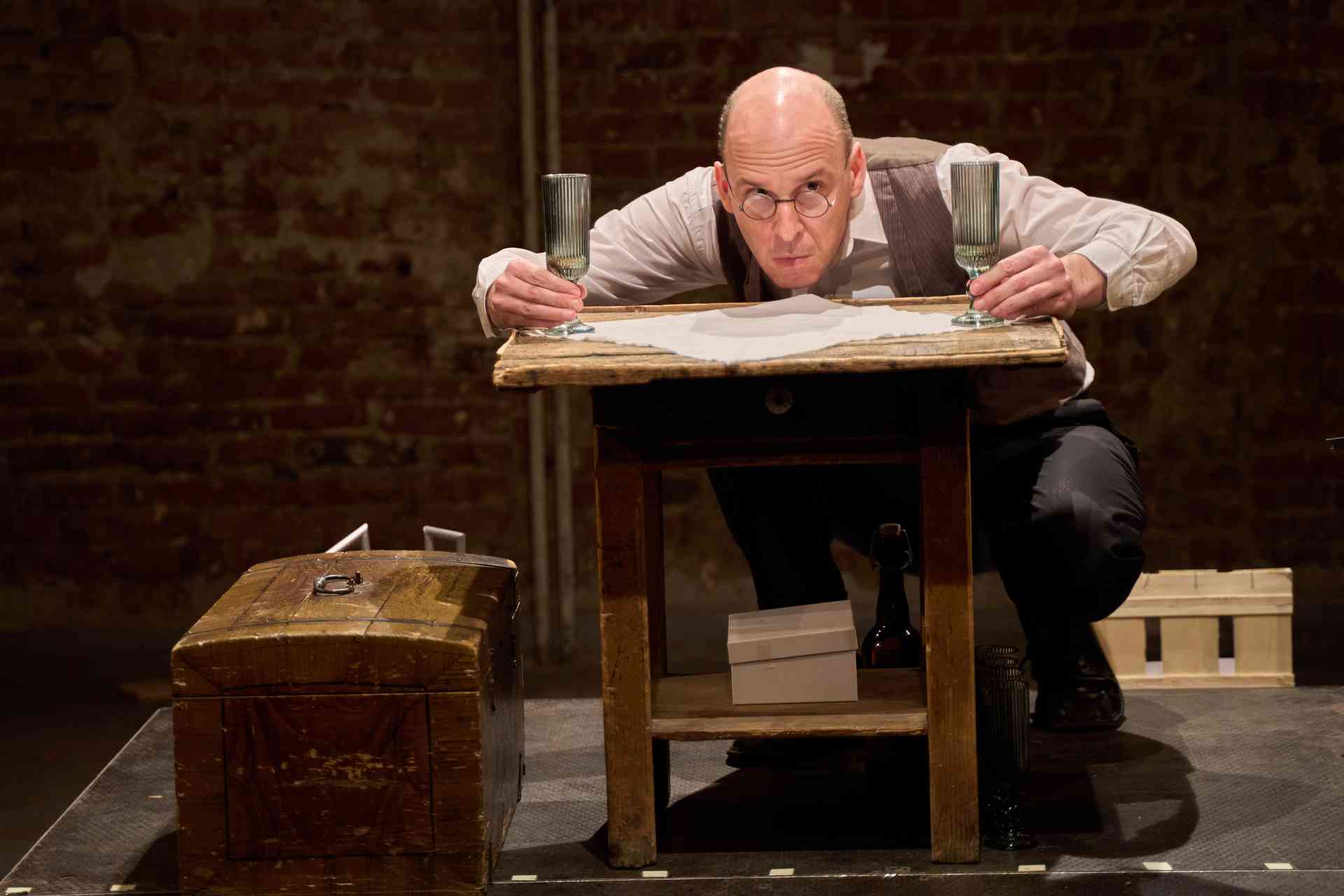
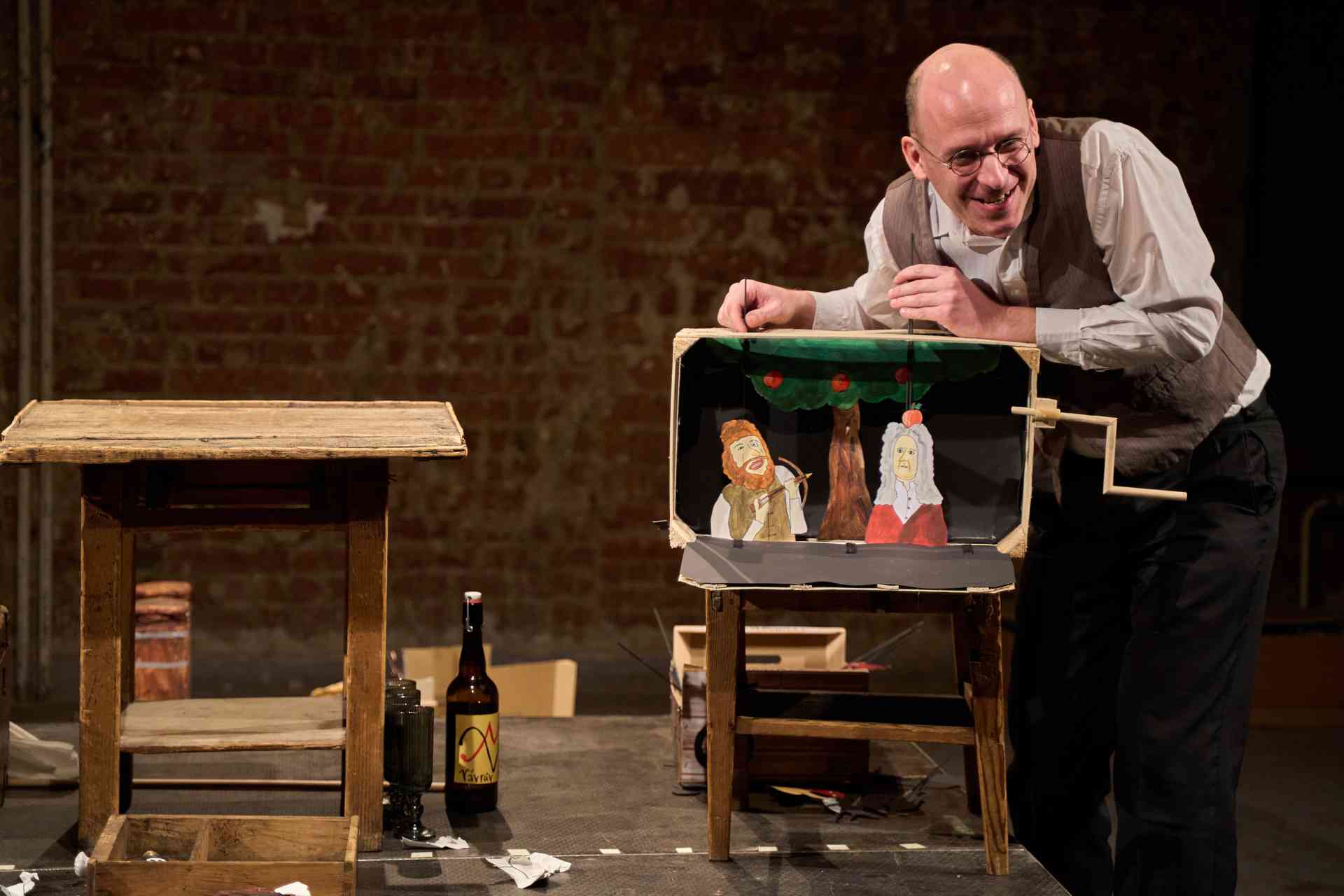
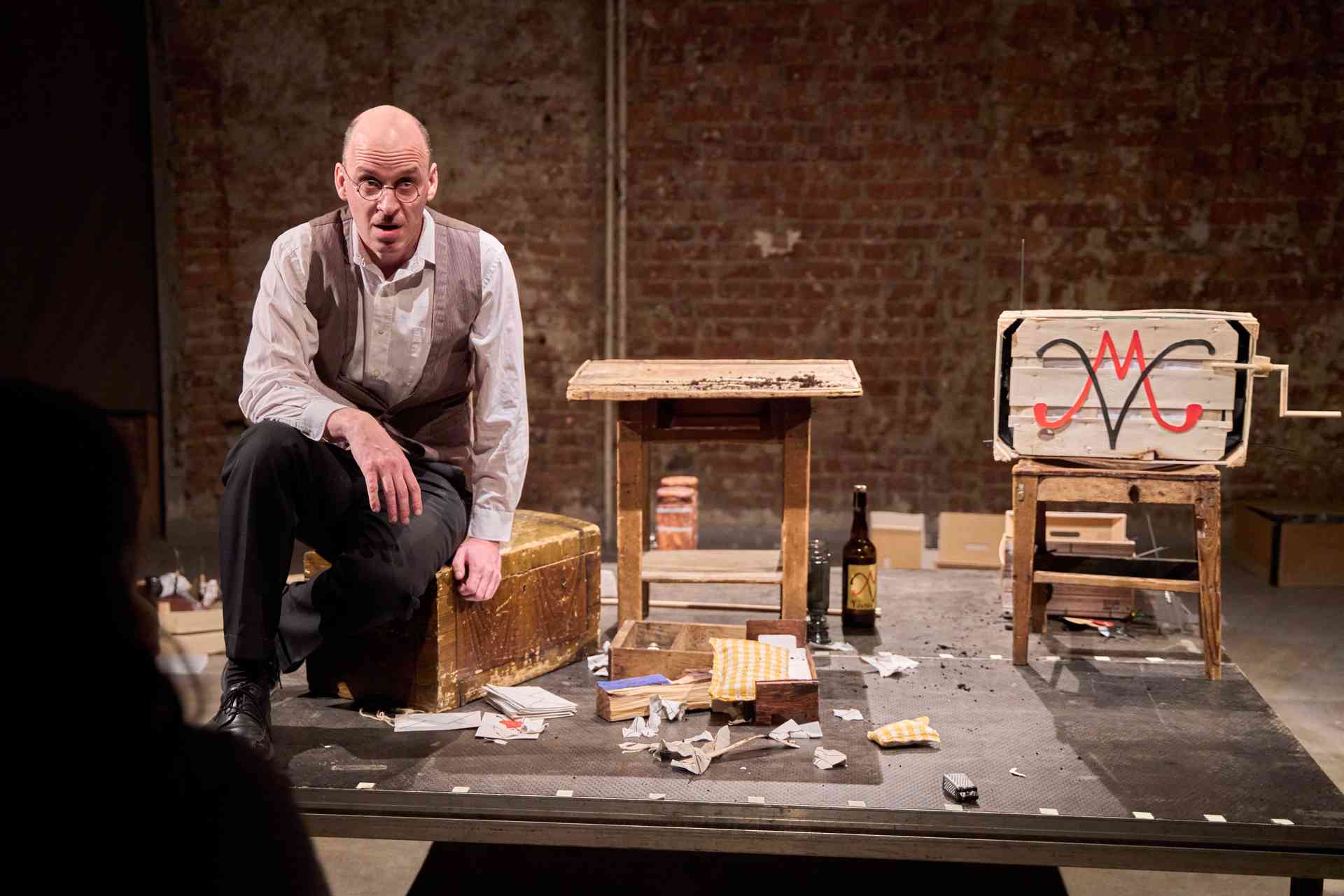
MARYŠA VÁVROVÁ Maryša through Vávra’s eyes. The piece was written “to order” for the first edition of the Prague festival Císařovy nové šaty, held in memory of Professor Jan Císař, the remarkable theatre scholar. The organisers asked either for Maryša (the professor’s favourite play) or for a production with lots of apples in it (a nod to a theoretical problem the professor used to raise: the overuse of the apple as a symbol on stage). Maryša Vávrová is an attempt to reconcile both briefs, by an author who speaks neither the Haná nor the Moravian Slovak dialect and will therefore speak in his own. So much by way of an opening apology to the Mrštíks and an explanation for everyone who loves the classic Maryša.
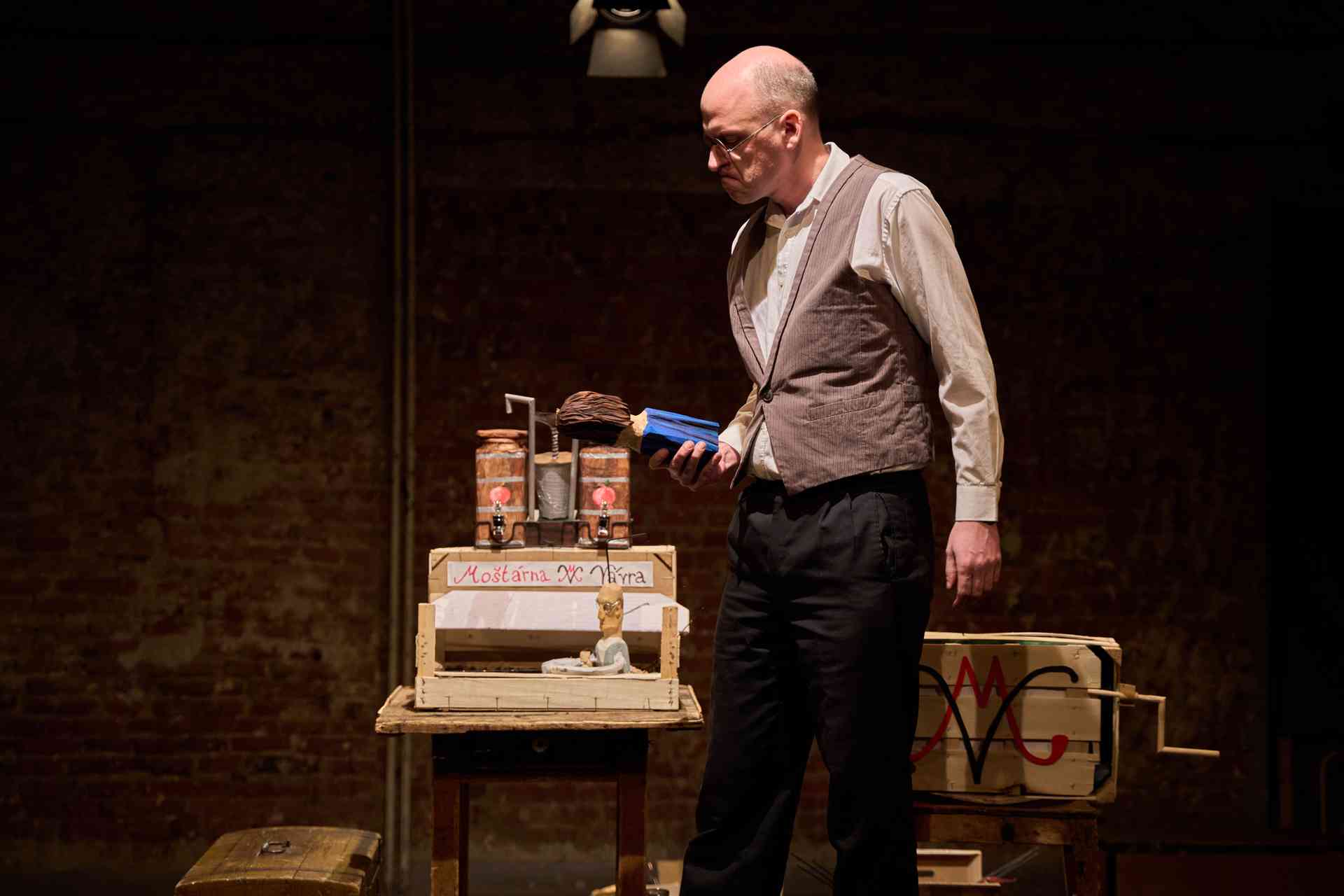
The whole design is the work of Tomáš Hájek and overflows with that fabled, beguiling artistic naivety, but with humour too – for instance when the Vávra puppet behind the bar has absurdly long, hose-like arms so as to reach everywhere with ease. In Maryša, though, Tomáš Hájek has let rip on every element of the production. He has propped up the invented dialect of Maryša with coinages of his own and a stylised delivery (and the word “jabčiště” – apple orchard – though it may really exist in the Krkonoše dialect, reaps well-earned laughter). He has wrung the most from this reading of the famous story from the “other” point of view, subjecting it to a strict, realistic, causal logic that is a source of comedy but also hard to argue with. At the same time, both the form of the production and the story itself play to Hájek’s acting register, familiar from his “overhead-projector period” – that of the emotionally invested master of ceremonies.
ADÉLA VONDRÁKOVÁ, Divadelní.net
The humour here is almost offhand – clever and hidden. It begins with the very transfer of a tragic plot into small grotesque puppets and three sets built from fruit crates – a church, a bedroom and a cider house (the brief the production was made for cited the late Professor Císař’s alleged aversion to apples on stage); it glints through the theatrical asides (including references to Hanka Voříšková’s Apples, which precedes it); and it comes out most openly in the adverts for Vávra’s cider, the cutaway comic interludes that break the most highly charged moments (…).
LUDĚK RICHTER, Zpravodaj Loutkářské Chrudimi
TOMÁŠ HÁJEK An amateur player from the Krkonoše village of Poniklá. A surveyor by training, he has long been the mayor of his native village of 1,100 souls. He has always enjoyed theatre in its collective drama form too, but the puppet kind he mostly creates and runs entirely on his own.
BAŽANTOVA LOUTKÁŘSKÁ DRUŽINA of Poniklá was for many years associated solely with the overhead projector (and the shadow plays staged on it). So much so, in fact, that it now has the ambition of proving to itself and to its esteemed audiences that it can manage without the overhead projector. Though, let’s admit it, the going is hard… Especially when there is a single performer to carry the lot.