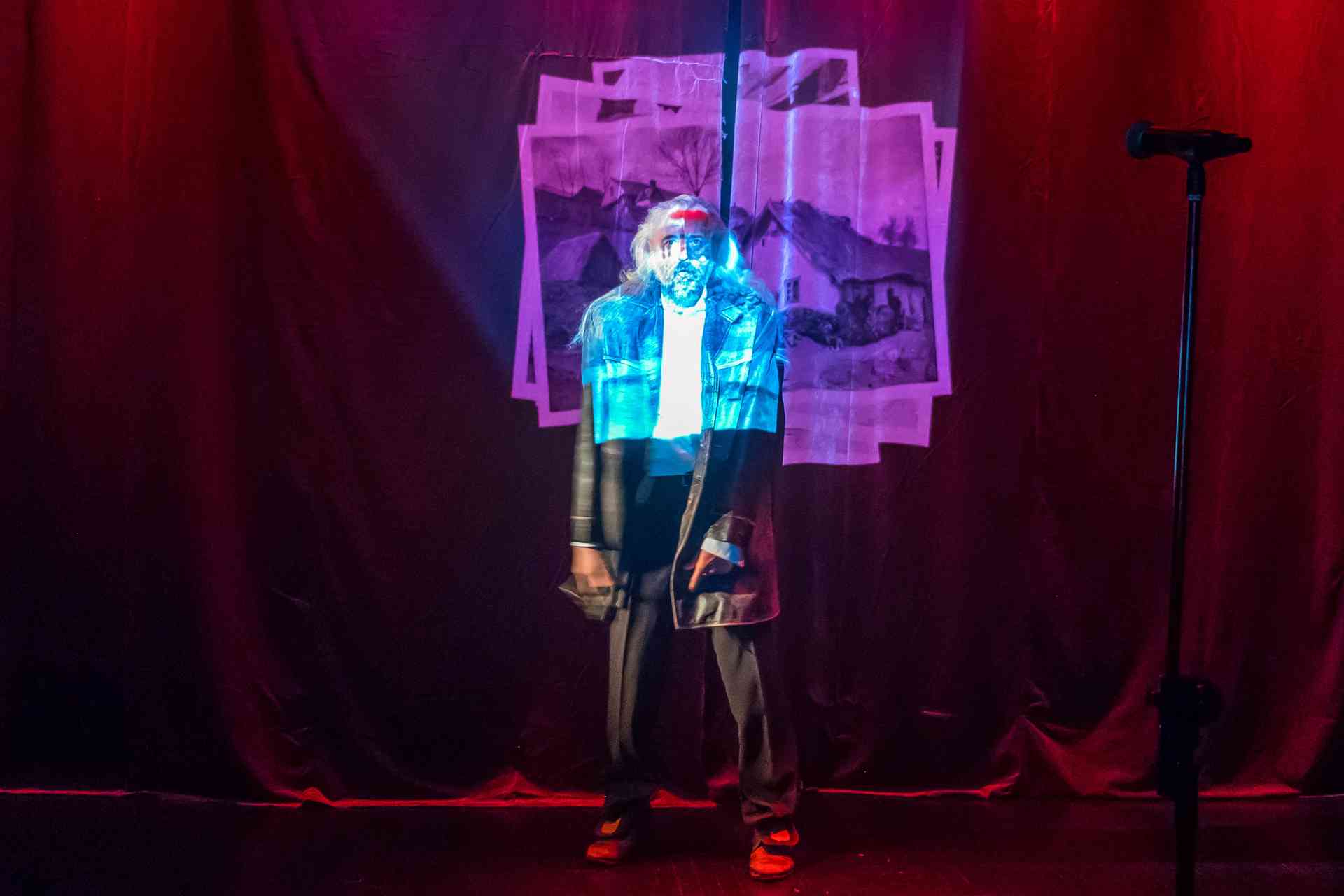
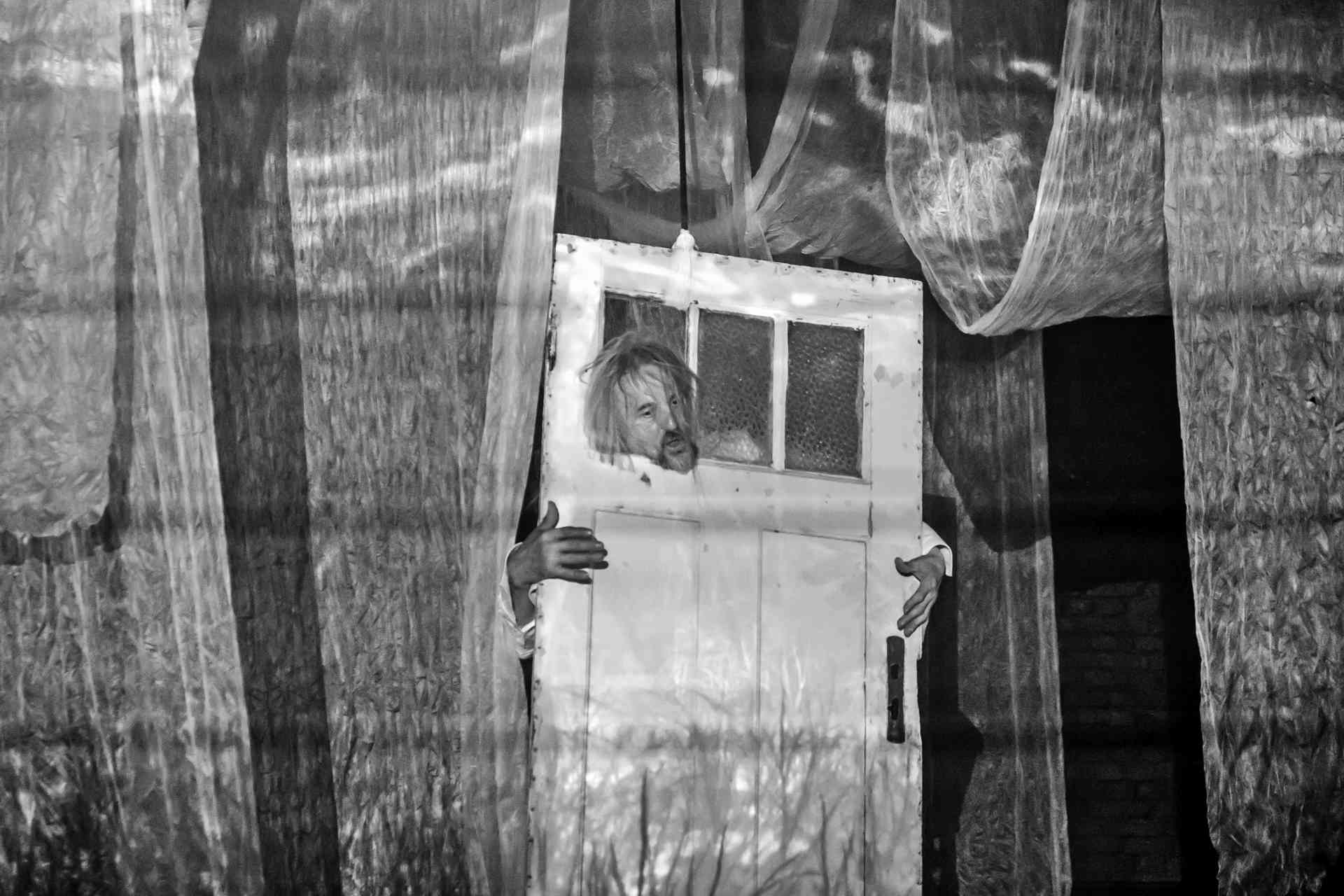
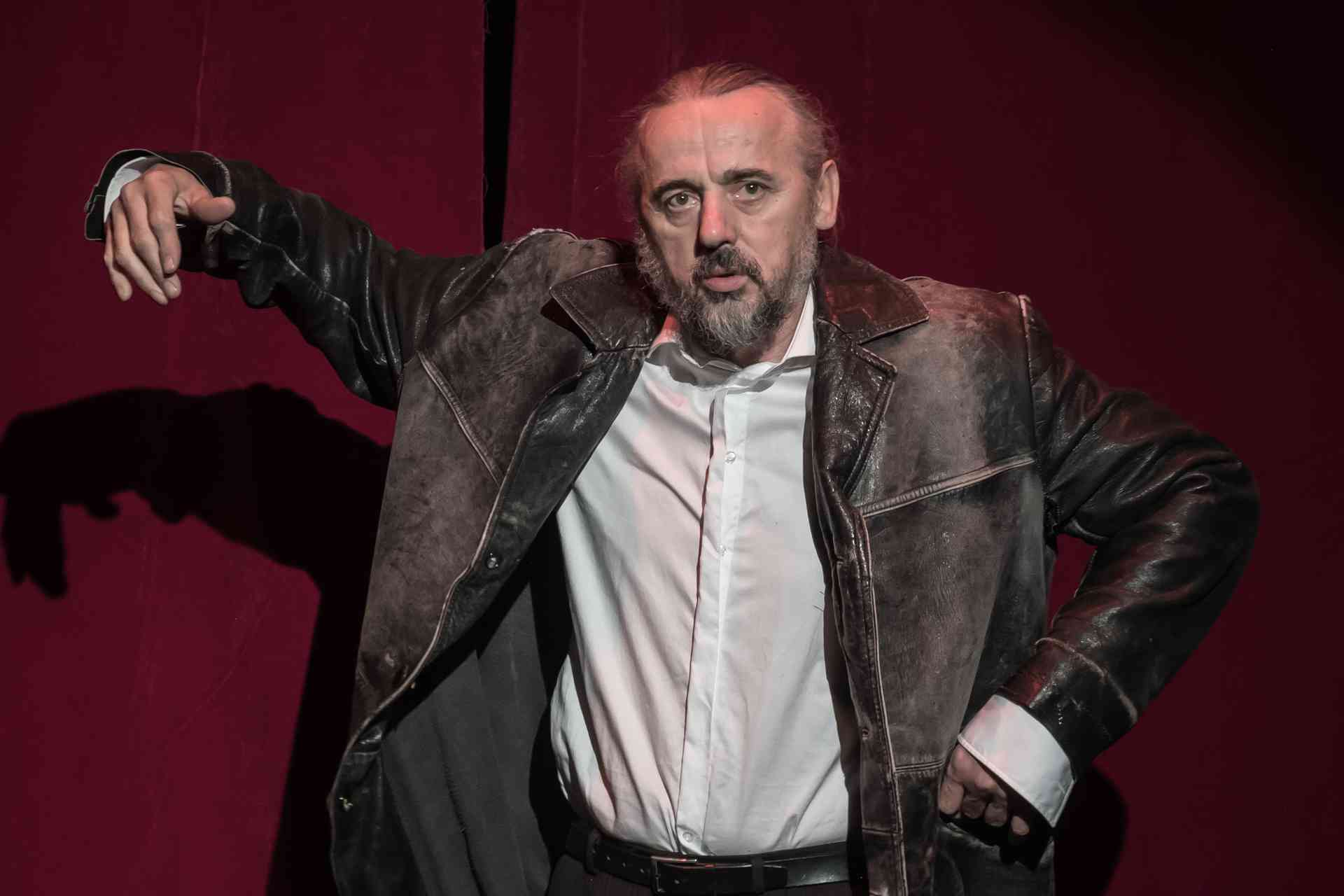
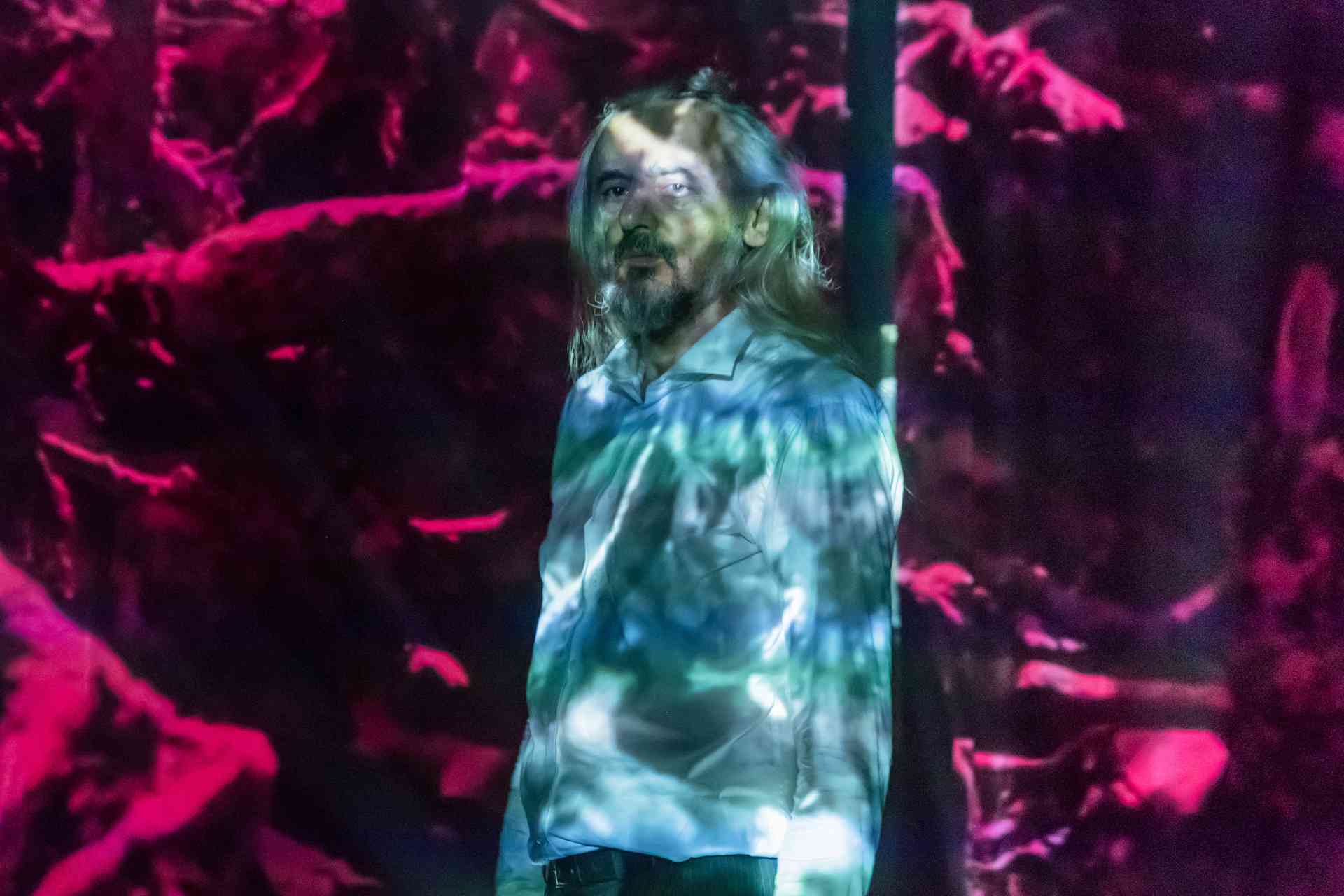
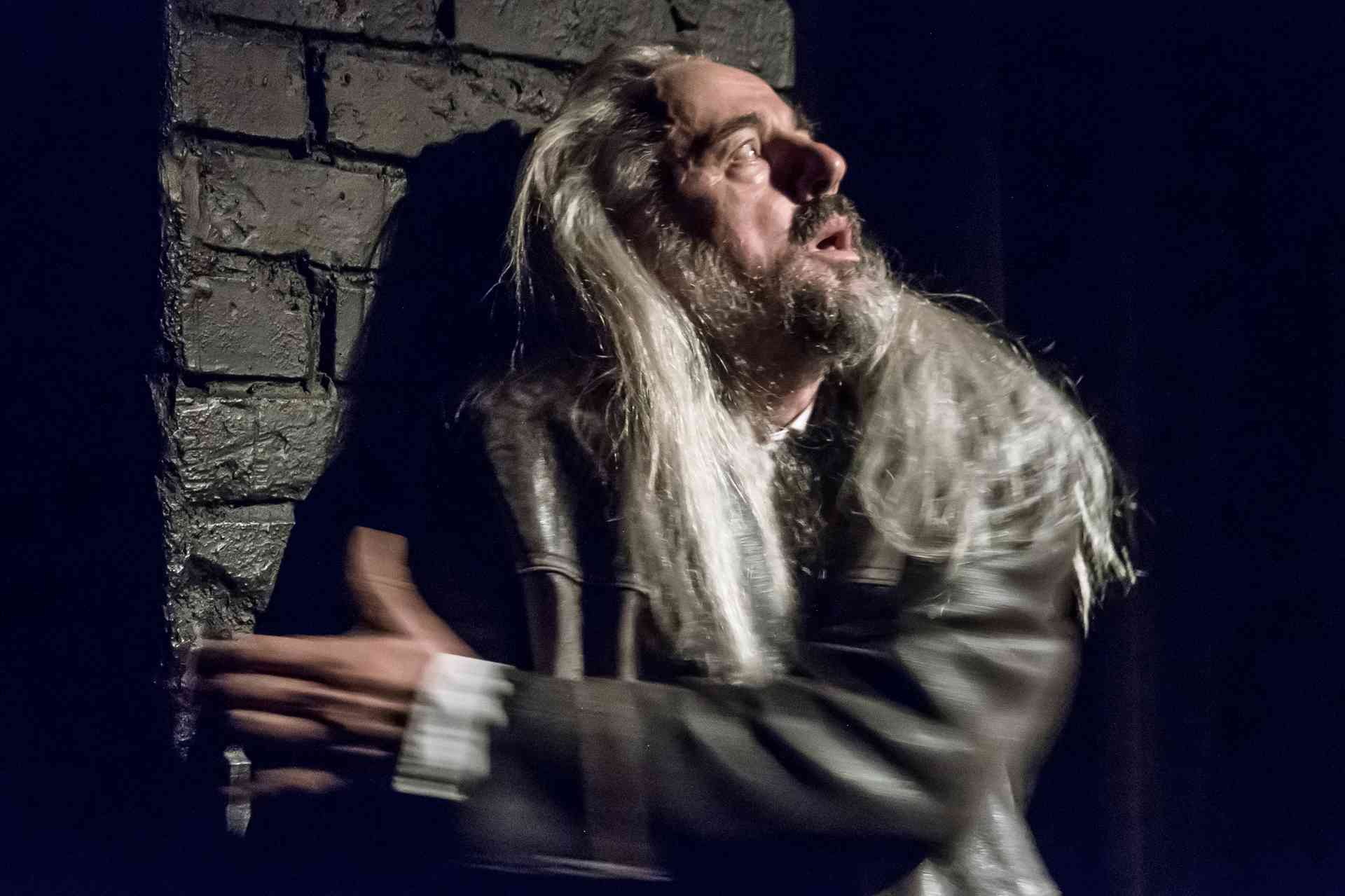
THE LUCKY STAR AFTER FRANZ K. “Each of us has his own way of emerging from the underworld, mine is by writing,” Franz Kafka observed in a letter to Felice Bauer. Perhaps it is in moments like these that the essence of magic reveals itself, summoning the invisible splendour of life by calling it by its true name. Paradoxically, Kafka was one of its great celebrants: a persistent seeker of a lucky star, as he wrote in a letter to Felice Bauer. In his monodrama, drawing on works including A Report to an Academy, The Metamorphosis and A Hunger Artist, Janusz Stolarski follows the writer’s voice. The creator of the production repeats Kafka’s words, but eventually falls silent, allowing only his body to speak, marked by the presence of Kafka’s characters. What we hear then is the space through which he moves, and to which he submits.
JANUSZ STOLARSKI is a Polish actor, director and theatre educator, and a co-founder of the independent theatre association Stowarzyszenie Teatralne Antrakt in Poznań. His work combines original theatre-making, physical performance, music and literature, bringing academic reflection together with theatre practice. Janusz Stolarski has long been associated with the alternative theatre scene. He is also a member of the legendary Teatr Ósmego Dnia. As a creator, he has contributed to numerous award-winning productions and workshops presented at major European festivals. Stolarski is also involved in theatre education and socially engaged projects. Since 2008, he has worked with groups at risk of social exclusion, and since 2015 he has led Teatr Pod Fontanną, part of Teatr Powszechny at Centrum Kultury Zamek in Poznań.
TEATR ÓSMEGO DNIA (Poznań, Poland) Although history naturally invites us to look back, Teatr Ósmego Dnia (Theatre of the Eighth Day) continues to focus primarily on the present, even after more than six decades of its existence. Despite changing times and generations, it remains a constant presence on the European alternative theatre scene. The theatre was founded in 1964 as part of a student movement. Influenced by the work of Jerzy Grotowski, it soon began developing its own theatrical language and innovative acting methods. During the 1970s, it became known for its critical perspective on social reality. In the spirit of a manifesto by one of its founders, Lech Raczak, its work focused on challenging established patterns of thought and actively encouraging change. The company became professional in the 1980s. Its close ties to the anti-communist opposition – including the Workers’ Defence Committee (KOR) and the Solidarity movement – and its politically engaged productions led to persecution by the regime. The theatre was therefore forced to continue its work in exile in various European countries. Its return to Poznań in the 1990s marked the beginning of a new era. At its home at 44 Ratajczaka Street, the company established an important cultural centre that became an incubator for Poland’s alternative theatre scene, including companies such as Teatr Biuro Podróży and Strefa Ciszy. During this period, Teatr Ósmego Dnia also became a pioneer of large-scale street theatre. At the beginning of the new millennium, its cult production Arka toured Europe, the Americas and Asia, including an appearance at the Divadlo International Theatre Festival in Pilsen. Another important project was Teczki, based on files kept on members of the theatre by the Polish secret police, which received considerable acclaim, including in the United States. Today, Teatr Ósmego Dnia operates as a municipal cultural institution. It has a long-standing commitment to socially engaged projects and opens its spaces to students, older people, people experiencing homelessness and refugees. True to its roots, Teatr Ósmego Dnia responds to current social developments and creates a safe space for public discussion and the search for answers.