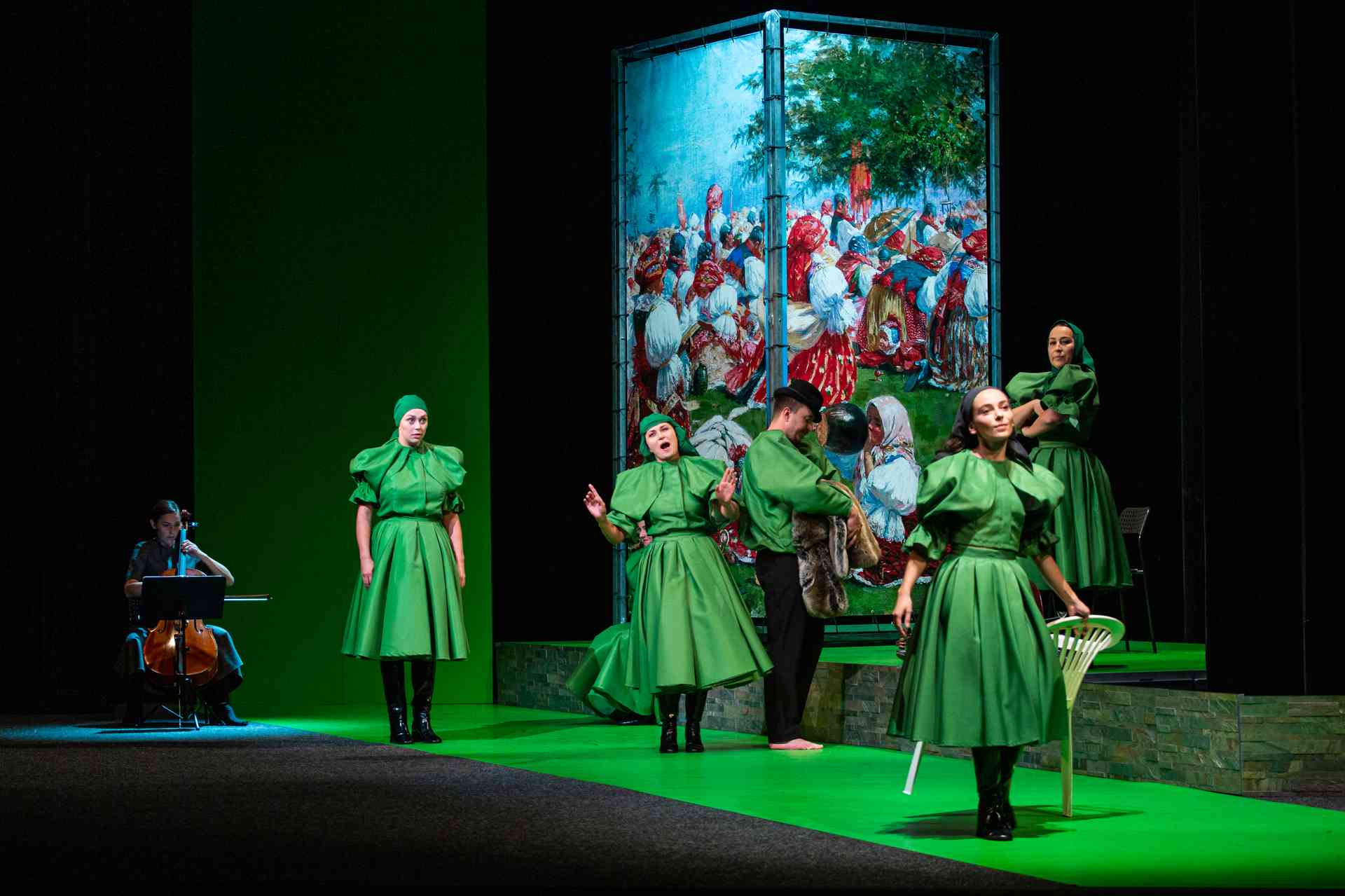
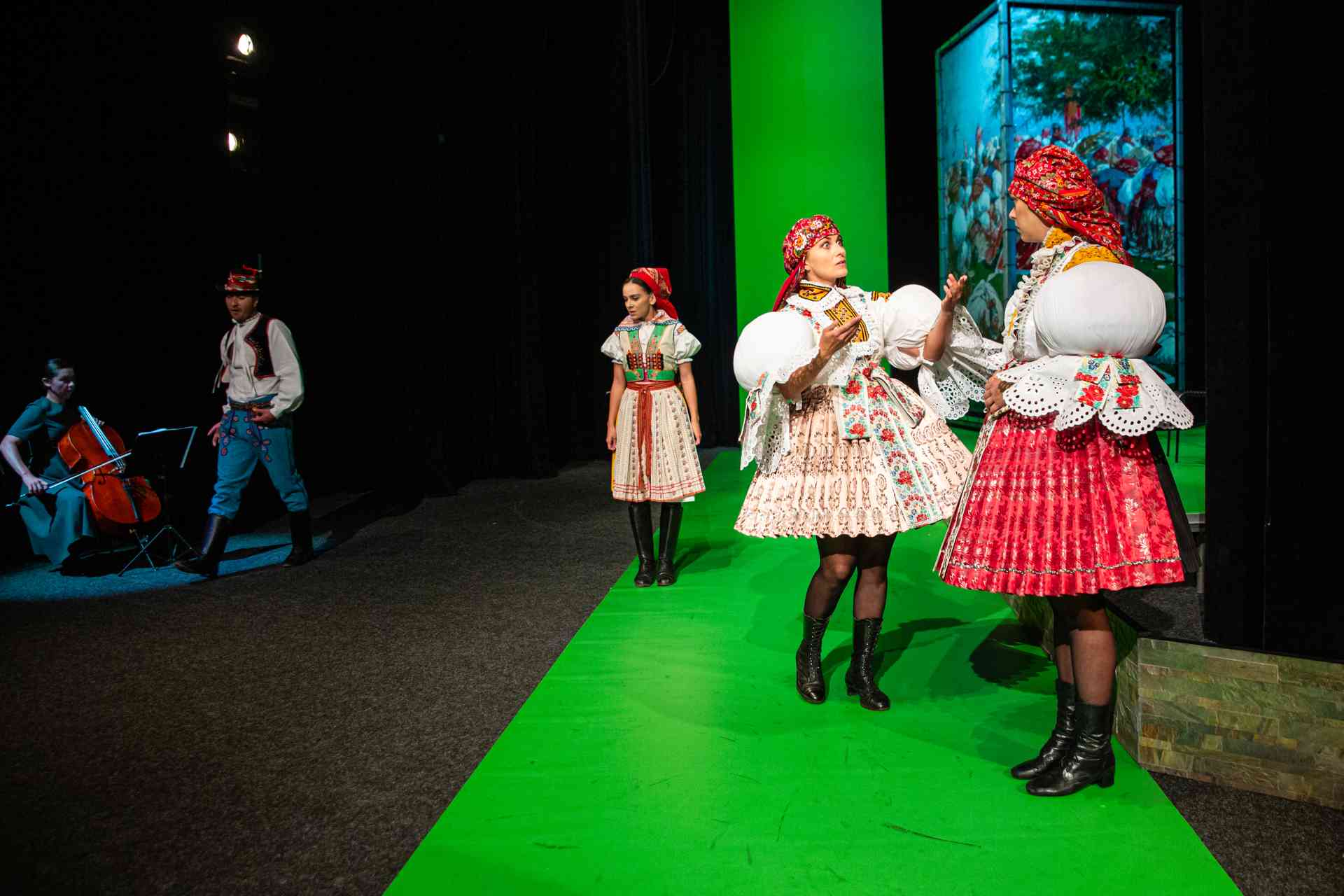
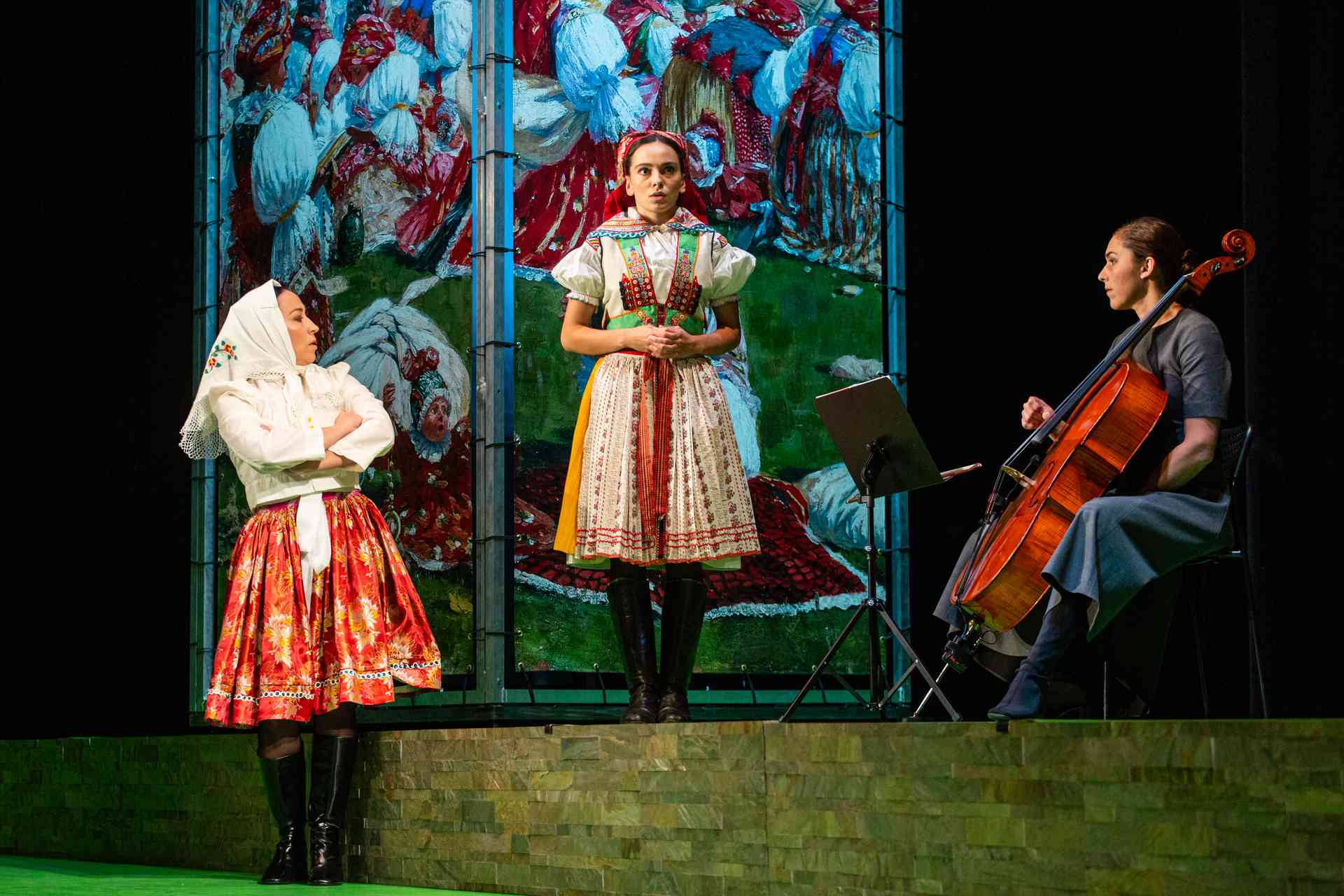
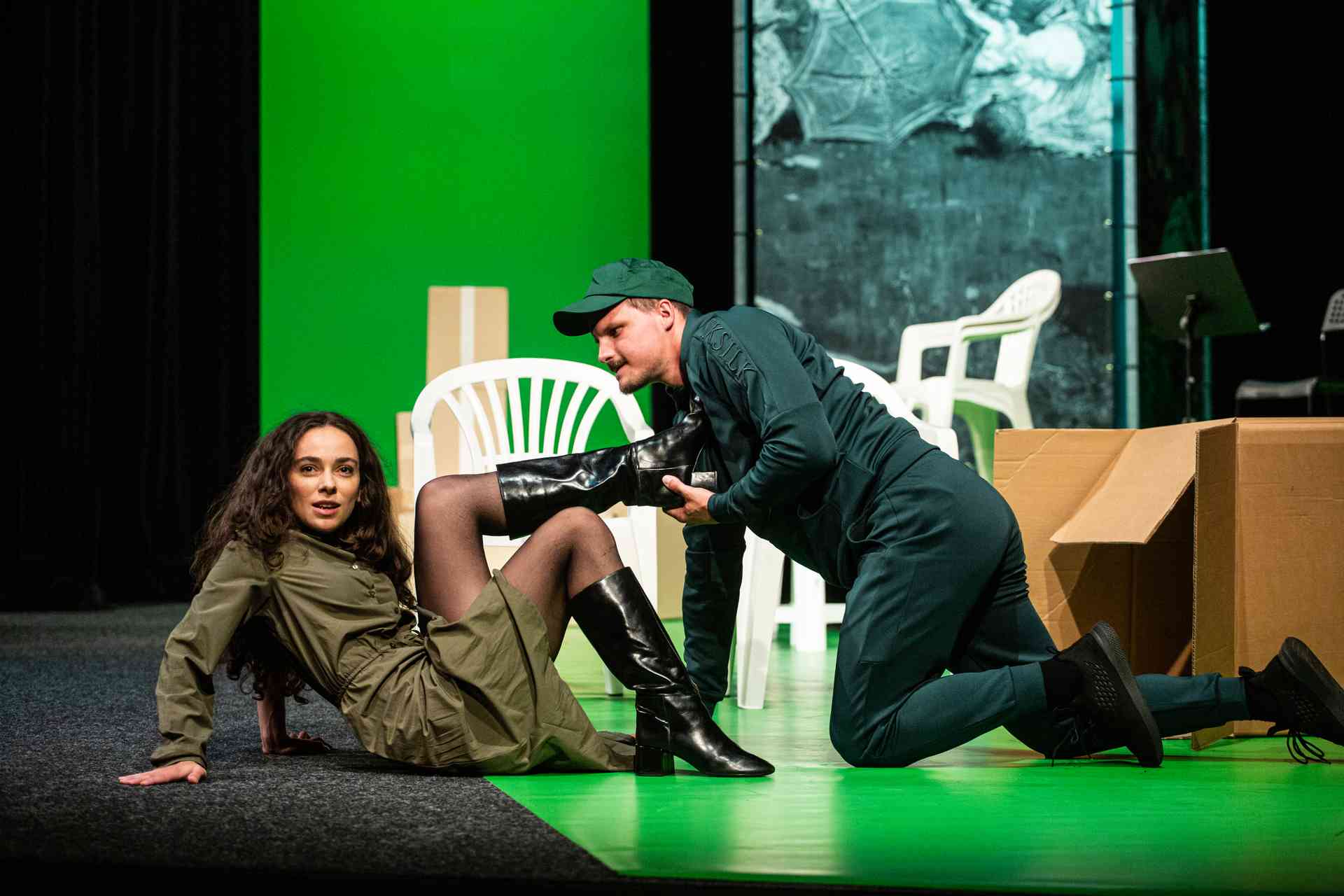
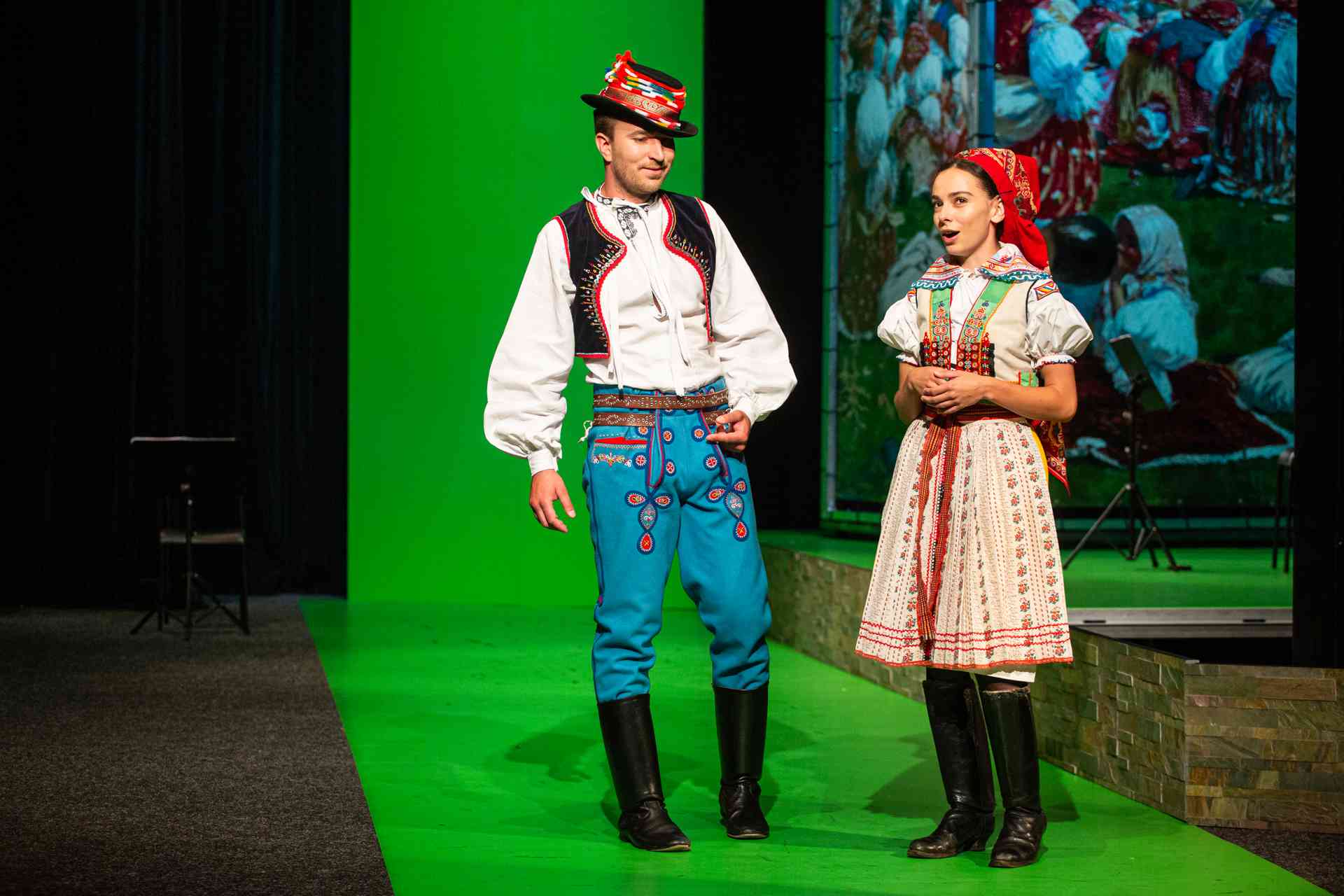
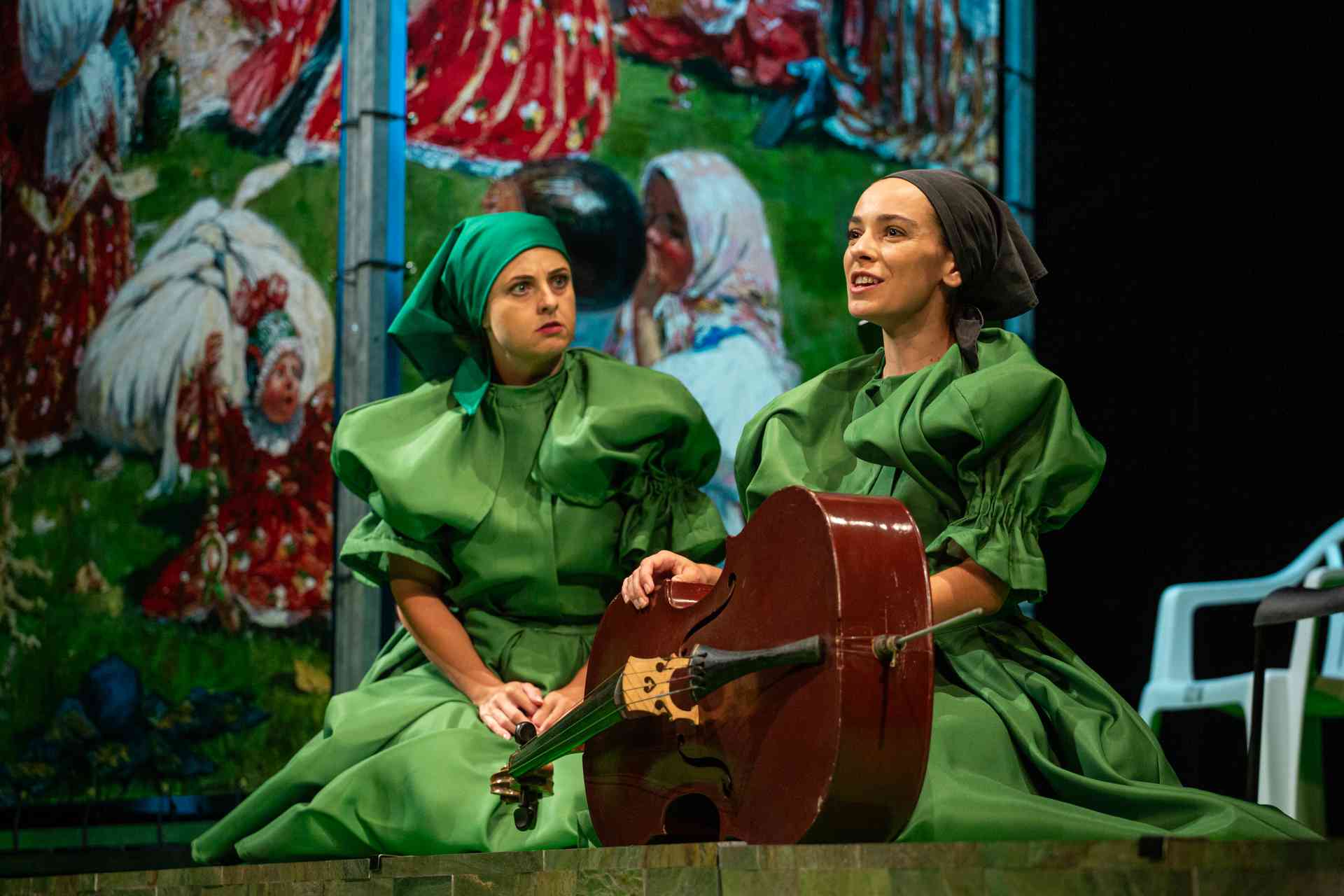
THE FARMER’S WOMAN A powerful rural drama about the right to pursue one’s own happiness against all odds. One of the earliest Czech plays to address women’s emancipation, it explores themes of gender equality, envy and intolerance, personal freedom, and the responsibility each individual bears for their own choices, regardless of gender, social status, or confession. Gabriela Preissová wrote this piece, her first play and one of the masterpieces of Czech realist drama, at the age of twenty-seven, drawing loosely on a true story. Its premiere at Prague’s National Theatre in 1889, where the author was encouraged to transform her original prose narrative into a stage work, sparked one of the greatest controversies in the history of Czech theatre. A passionate and dynamic tale of an unequal and forbidden love between the poor but proud seamstress Eva and the wealthy but feeble Mánek, unfolding against a backdrop of false morality and “immutable” social rules capable of breaking many a loving heart, has repeatedly found its way onto Czech and Moravian stages in various forms. The current production at the Slovácko Theatre has been directed by its former director Michal Zetel. The creative team brings together artists deeply rooted in the traditions and symbolism of the Slovácko region – including set designer Eva Zezula (née Jiříkovská) and dialect consultant Pavel Šupina – with composer Vojtěch Dlask, whose perspective comes from outside the region. The theatre itself, which opened in 1945 with another of Preissová’s major plays, Her Stepdaughter, has maintained a longstanding relationship with the playwright’s work. For her performance in the title role, Klára Ondrůšková was named Talent of the Year in the annual Czech theatre critics’ poll.
(…) From the precise depictions of relationships and situations, and the high degree of stylisation, themes emerge that are as relevant today as they were in 19th-century realist dramas. For example, if a man has several women, this gives him prestige in certain circles. Until recently, having a mistress was a sign of high social standing and was almost a necessity for certain positions. Meanwhile, a woman is expected to be a model wife and mother, and if she is the home-wrecker, she is far more likely than a man to become the target of gossip. The actors are aided in their performances by a touch of comic exaggeration. This is most evident in the operetta-style portrayal of Mrs Mešjaná, the manipulative mother.
KATEŘINA VAIS, Divadelní.net
Klára Ondrůšková (…) brings the character to life with considerable inner tension. In her portrayal, Eva is single-minded, headstrong and physical, as demonstrated by her stamping of feet and posture. However, she also remains vulnerable and sensitive. Eva is certainly not a passive victim of circumstances; she is well aware of her own worth and the effect she has on the men around her. She is the one who sets things in motion and determines the dynamics of relationships. In Mánek’s case, she is also able to use her sexuality and their mutual attraction as a tool of power.
NATÁLIE BULVASOVÁ, Svět a divadlo
Rather than interpreting The Farmer’s Woman dogmatically or reverently, Michal Zetel sees it as a timeless template story. Adopting a broad perspective and applying precise exaggeration, he stylises the individual characters into poses that verge on caricature. In this respect, he walks a fine line between what is possible and what is not – an approach that could easily backfire in many other productions. Fortunately, the Slovácko Theatre has actors who are so flexible and accustomed to the varied approaches of different directors – Jan Antonín Pitínský, Anna Davidová, Dodo Gombár and Radek Balaš, to name but a few – that they can adapt effortlessly to the chosen style while maintaining the necessary decorum.
JIŘÍ LANDA, Divadelní noviny
ZETEL (1981) He graduated in Drama Directing at the Theatre Faculty of the Janáček Academy of Performing Arts (JAMU) in Brno. He has worked with numerous theatres across the country as both a director and an actor. In 2004, he co-founded Tramtarie Theatre in Olomouc. Between 2005 and 2013, he served as artistic director of BuranTeatr in Brno, where he established the company’s distinctive artistic profile with productions including his adaptation and direction of Molière’s The Misanthrope, the original documentary production Antonín Huvar, and Adam Mickiewicz’s Forefathers’ Eve (Dziady), a landmark Romantic drama that had not been staged in the Czech Republic for a century. Zetel began collaborating with the Slovácké Theatre in 2012, directing productions including David Mamet’s Oleanna, Tennessee Williams’ Cat on a Hot Tin Roof, Alžběta Michalová’s Autistic – My Damned Nerves!, Richard Bean’s One Man, Two Guvnors, Roland Schimmelpfennig’s The Golden Dragon, Scott McPherson’s Marvin’s Room, Josef Kajetán Tyl and František Škroup’s Fiddlers’ Feast (Fidlovačka), Ladislav Smoček’s Cosmic Spring (Kosmické jaro), Anton Chekhov’s Three Sisters, Gabriela Preissová’s Her Stepdaughter (Její pastorkyňa), and the production How Did We End Up Here? (Jak jsme se dostali až sem), created by Zetel and collaborators. From 2015 to 2020, he served as the theatre’s artistic and general director. During his tenure, he also established the SLoffÁCKO THEATRE programme, dedicated to intimate studio productions, which included Mark Charman’s The Dog Logs and Lutz Hübner’s Frau Müller muss weg! He is currently Artistic Director of the Horácko Theatre in Jihlava and Vice-Dean of the Theatre Faculty of the Janáček Academy of Performing Arts (JAMU).
SLOVÁCKO THEATRE has repeatedly demonstrated that its significance goes far beyond that of a regional theatre. Under the artistic direction of Lukáš Kopecký, it invites experienced directors as well as rising stars with a fresh perspective. The alternative dramaturgical line, SloffÁCKO THEATRE, offers contemporary plays in non-traditional spaces (a rock club, a school classroom). It presents its work at leading festivals. Together with the Zlín City Theatre it organises the ZARÁZ festival, at which they present their best productions to a specialist public.