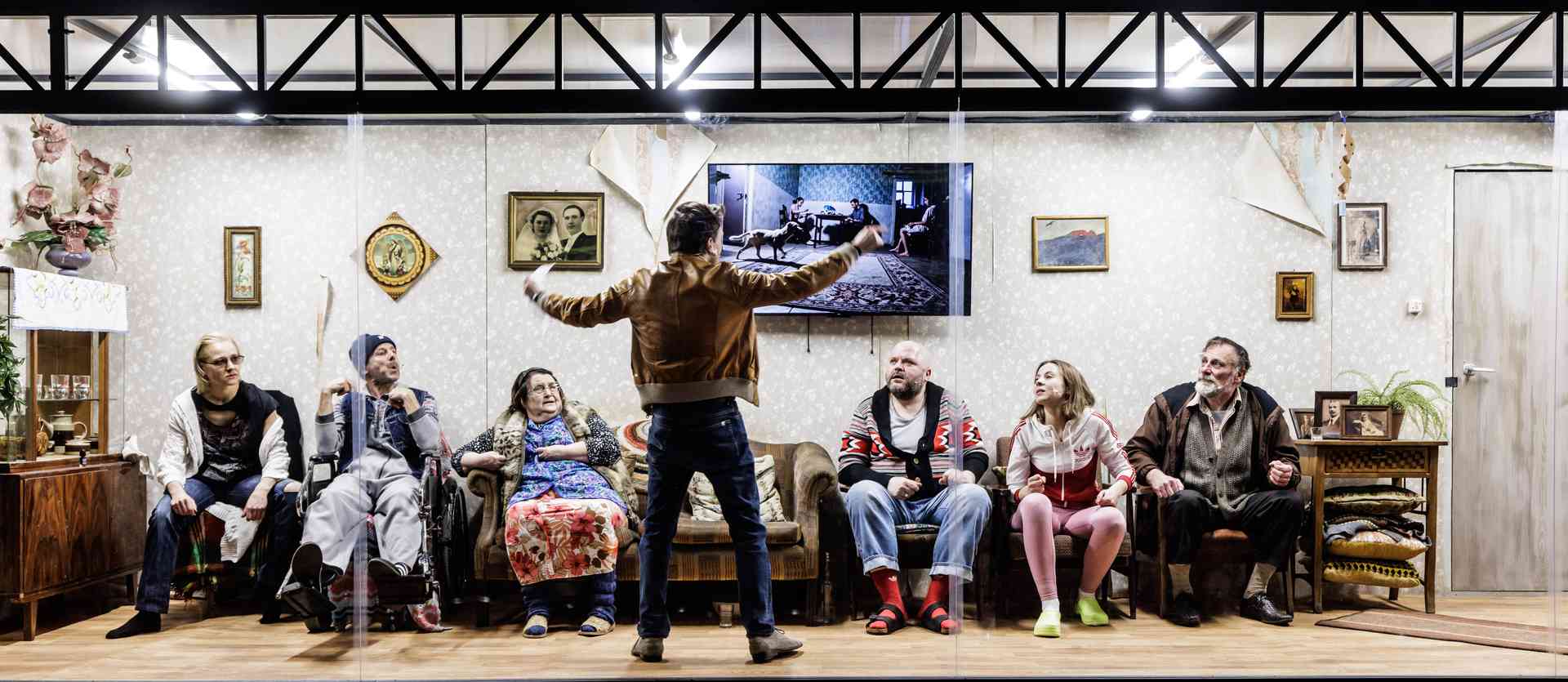
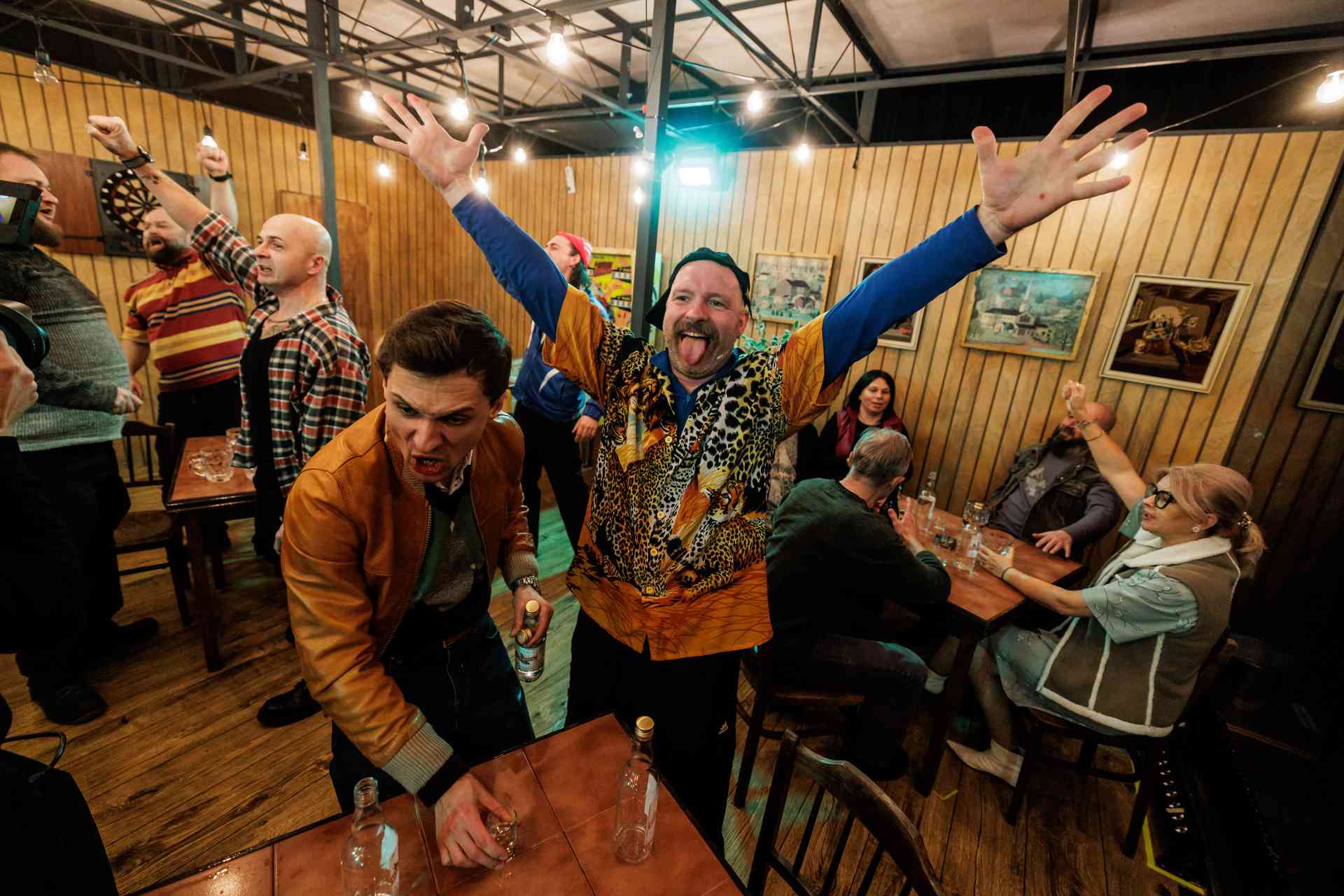
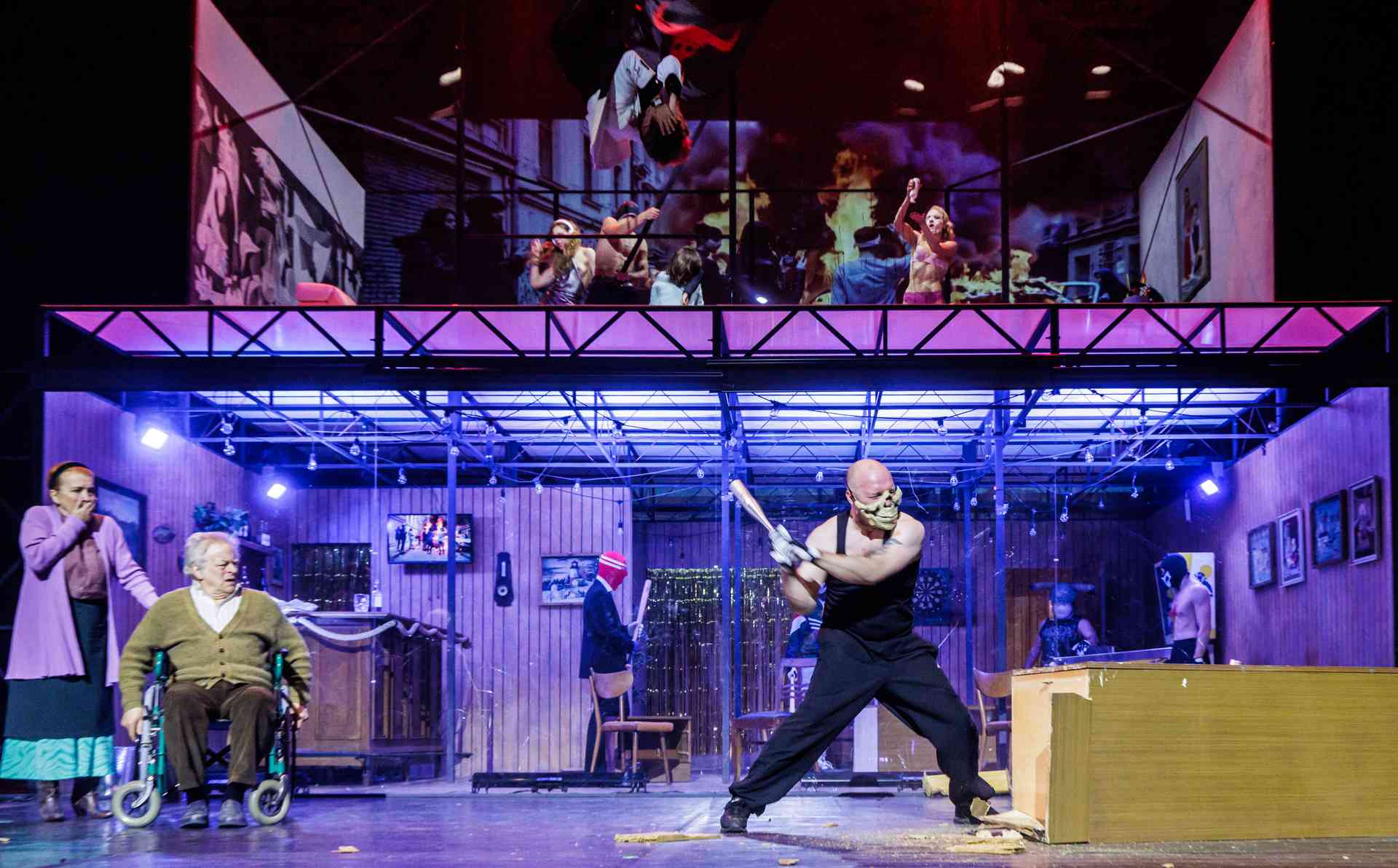
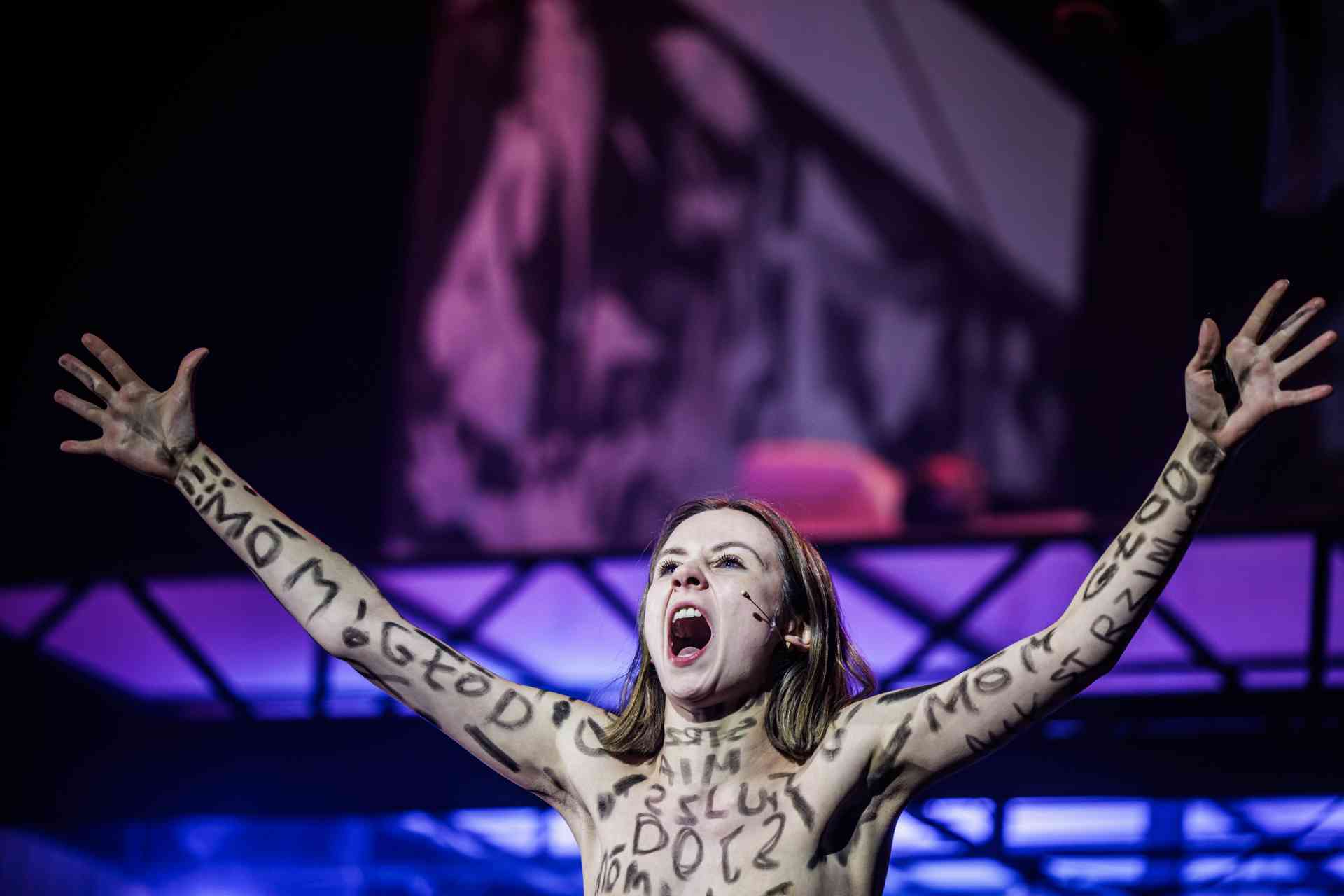
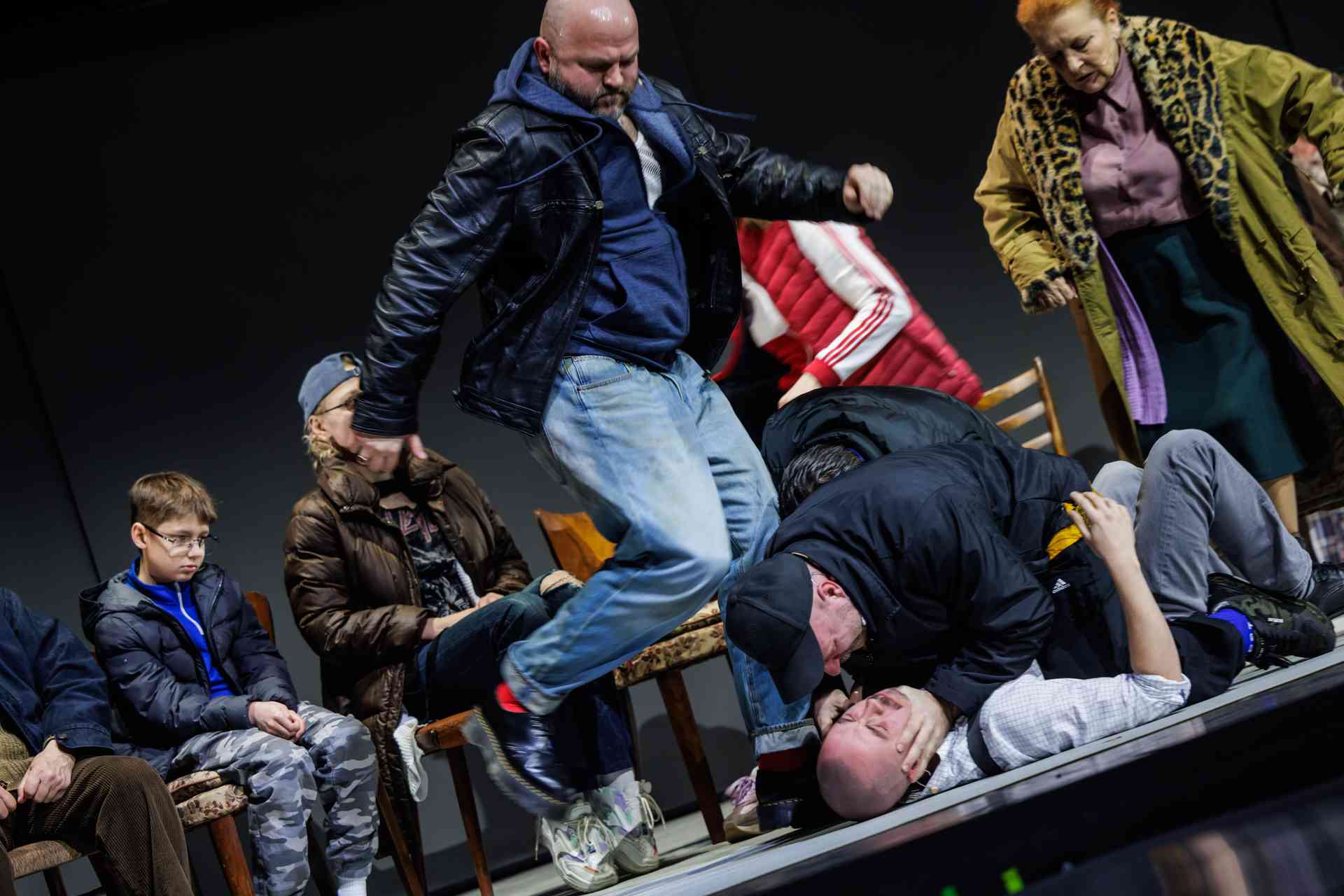
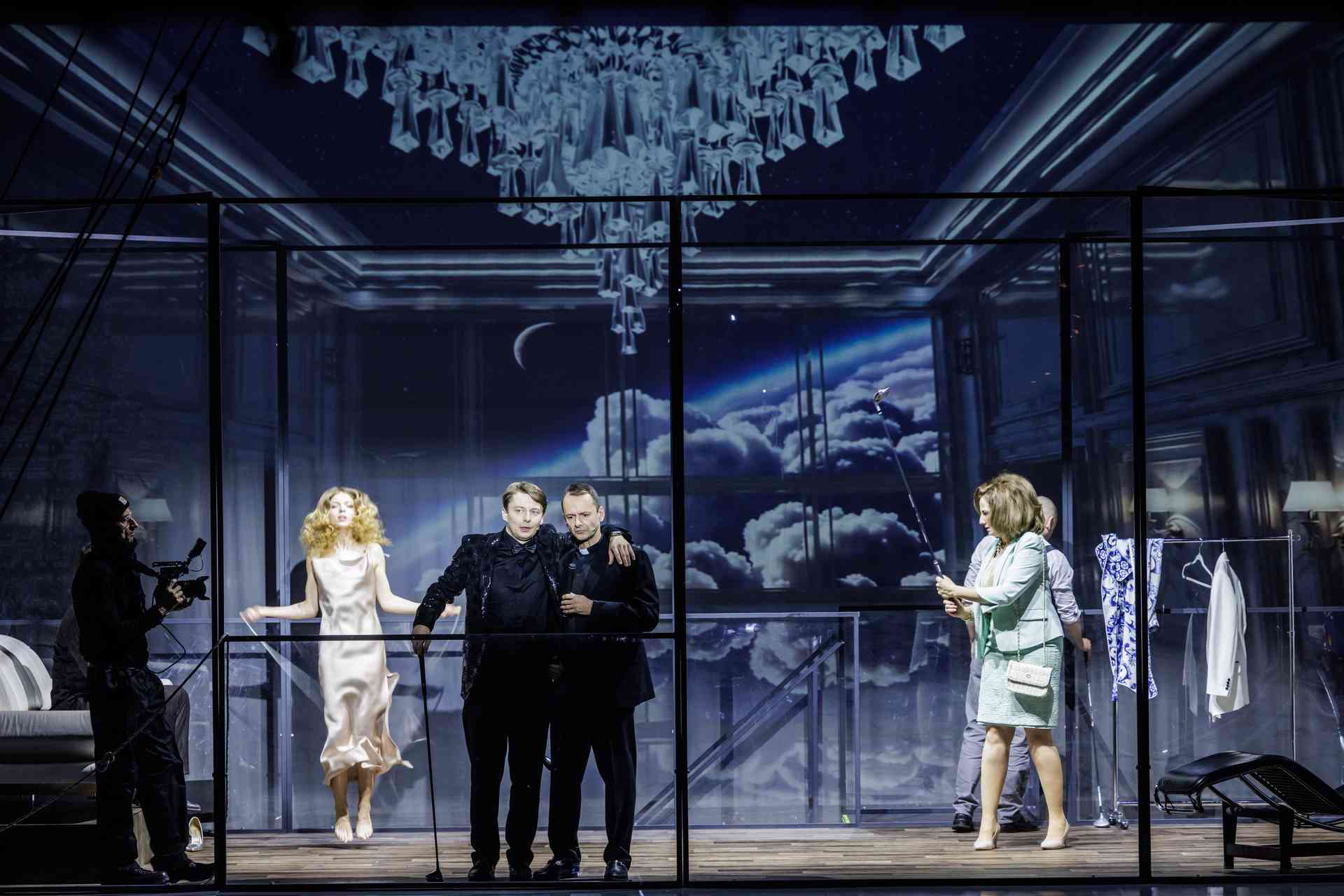
THE WEAVERS Exploited and humiliated by those in power, speaking a language no one else understands, living within a close-knit multigenerational community – now they raise their heads and demand to be respected for who they are. And should anyone lay a hand on what makes them who they are, they are ready to set off a revolution.
In the middle of 1844, Europe was shaken by the tragic and bloody events of the Silesian weavers’ uprising in the Owl Mountains of Lower Silesia. The press coverage it drew became a symbolic spark that would later help kindle what is now called the Springtime of Nations and the revolutions of 1848. The story of the Silesian weavers, who rose up in revolt for better living conditions, inspired figures including the Nobel laureate Gerhart Hauptmann. Seen from where we stand today, his 1892 drama is not merely a tale drawn from real events but, above all, a portrait of the struggle for recognition and dignity.
For her production, the acclaimed Polish director Maja Kleczewska draws on Mirosław Syniawa’s new translation into Silesian. The production also includes excerpts from Martín Caparrós’s reportage Hunger, translated by Marta Szafrańska-Brandt.
The actors of the Silesian Theatre deserve the highest praise for their sheer commitment and their craft. I was especially struck by Dariusz Chojnacki as the forever-irritable Bäcker, Marcin Gaweł as the almost feverishly neurotic Anton Ansorge, the superb Michał Piotrowski as the smug, arrogant Moritz Jäger, and above all the first-rate Mateusz Znaniecki as the factory owner Dreissiger, manipulating his employees.
MAŁGORZATA JĘCZMYK-GŁODKOWSKA, Z Pierwszego Rzędu
I have never seen ensemble playing so spontaneous at the Silesian Theatre. And the rebels’ song, with Maćko Prusak’s marvellous choreography, drives the whole thing home.
MARTA FOX, martafox.pl
The cast is unquestionably the production’s greatest strength. Special mention must go above all to Grażyna Bułka for her irreplaceable performance as Old Mrs Baumert.
KAMILA SERAFIN, Chodźże do Teatru
MAJA KLECZEWSKA has won a string of honours, among them the prestigious Polityka Passport – the annual award given by the weekly Polityka across every field of culture – the Silver Lion of the Venice Biennale, and the Golden Mask. In 2024 she received the Polish state’s Bronze Medal for Merit to Culture – Gloria Artis. She studied psychology at the University of Warsaw and theatre directing at the National Academy of Theatre Arts in Kraków. During her studies she assisted Krystian Lupa at Kraków’s Stary Theatre and also worked with Krzysztof Warlikowski. She made her debut in 2001 with a production of Jordan by Anna Reynolds and Moira Buffini at Kraków’s Juliusz Słowacki Theatre. Kleczewska is renowned for her focus on emotion and her painstaking work with the acting ensemble, which she is able to bring to extraordinary performances. She does not flinch from depicting cruelty and violence, and often works in a pop-culture-inflected aesthetic of kitsch. Her best-known productions include Macbeth (Jan Kochanowski Theatre, Opole, 2004), Sarah Kane’s Blasted (National Theatre, Warsaw, 2007) and The Dybbuk (Ester Rachel and Ida Kamiński Jewish Theatre, Warsaw, 2015). Audiences at the Divadlo International Theatre Festival first saw her work in 2010, when the festival presented her production of Chekhov’s Platonov from the Polski Theatre in Bydgoszcz.
THE STANISŁAW WYSPIAŃSKI SILESIAN THEATRE IN KATOWICE is the largest drama theatre in Upper Silesia. Founded in 1907 as the Stadttheater Kattowitz, renamed Teatr Polski in 1922, it has carried its present name since 1945. Over that time more than a thousand productions have been staged across its three stages, in German, Polish and the Silesian dialect. The theatre has been shaped by figures such as Wilam Horzyca, Gustaw Holoubek and Ignacy Gogolewski, who shaped it with a primary focus on the text. Robert Talarczyk has been its director since 2013.